
Rail employers need more than entry medicals and induction drug screens. Ongoing assurance often includes random drug testing, for-cause testing, and post-incident testing. Absolute Biomedical’s site speaks directly to organisations seeking unannounced or random drug and alcohol screenings, plus incident response / for-cause pathways in corporate packages. This article separates the three modes so HR, HSEQ and primary sponsors book the right thing for the right moment.
Three modes, three purposes
Random testing
Unannounced or randomised selection of workers within a defined pool. Purpose: deterrence, fairness across the workforce, and ongoing compliance culture. Absolute Biomedical highlights random testing programmes as part of keeping the workforce safe and compliant. Selection rules sit with the employer’s policy; Absolute Biomedical provides collection and laboratory analysis.
For-cause testing
Triggered by reasonable suspicion — for example observable behaviour, credible reports, or policy-defined indicators. Purpose: investigate a live concern promptly. Speed and chain of custody matter; employers should have a written trigger process so decisions are consistent.
Post-incident testing
After an accident, near miss, or other defined incident. Purpose: support investigation and safety learning under company and industry rules. Timing after the event is critical; Absolute Biomedical’s corporate offering explicitly references incident response / for-cause testing.
Absolute Biomedical’s FAQ notes that rail industry staff can be subject to random/for-cause and post-incident testing, though these are arranged by your employer — not casually self-booked by an individual who “wants a random.”
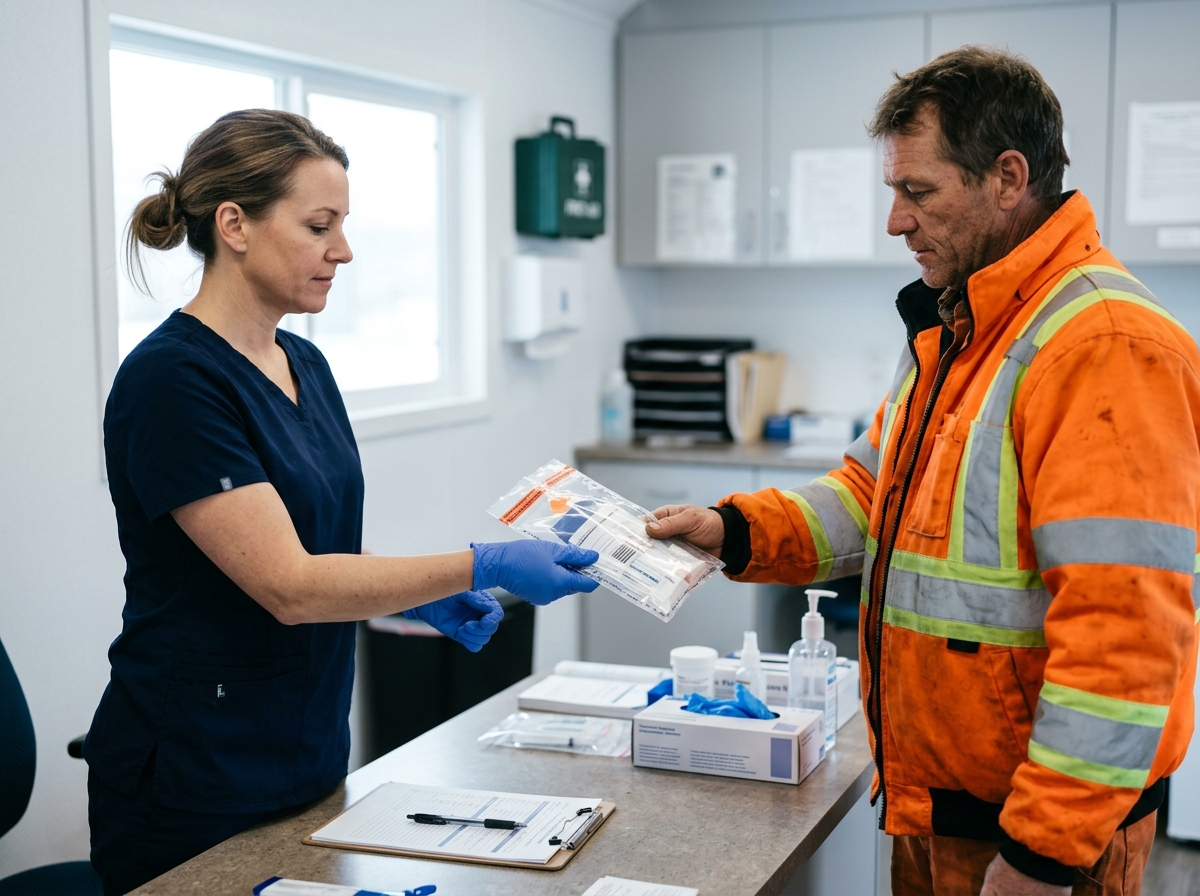
What the collection looks like (same science, different trigger)
Regardless of trigger, Absolute Biomedical’s Network Rail D&A pathway remains:
- Urine sample to RISQS-approved, UKAS-accredited lab
- Panel as published (amphetamines, benzodiazepines, cannabis, cocaine, EDDP, MDMA, opiates, propoxyphene)
- Alcohol via intoximeter / Home Office–approved breathalyser with immediate results
- Lab drug results typically up to ~3 days; longer if further investigation or MRO
- Positive outcome: five-year Sentinel suspension per Absolute Biomedical’s published copy
Medication declaration still applies. Chain of custody and collector competence still apply. The difference is why the person was selected, not how the sample is analysed.
Centre vs on-site for employer programmes
For random programmes covering dispersed gangs, on-site or multi-site collections usually beat asking everyone to travel to Abercynon. Absolute Biomedical states screening can be conducted at the centre or on premises, including office and site-based locations across the UK. D&A availability is described on the site as 24/7 so collections can fit shifts and possessions. Phone lines for planning remain Mon–Fri 08:30–17:00 on 01443 303009; email [email protected].
Employer checklist before you launch random testing
- Written policy aligned with Network Rail / company standards
- Clear definition of the testing pool and selection method
- Privacy, dignity and chaperone arrangements for collections
- Process for medication declarations and MRO review
- Communication plan so staff understand random is policy, not persecution
- Diary ownership: who calls Absolute Biomedical when a draw lands
- Escalation path for non-attendance or refusal
For-cause and post-incident add: who has authority to trigger, how quickly collectors can attend, and how results feed the investigation file.
How this differs from induction and sponsor-change screens
Induction (new starter) and change-of-sponsor screens are administrative entry gates (Posts 3 and 4). Random / for-cause / post-incident are operational controls after someone is already in the system. Mixing them up leads to wrong booking codes and confused candidates.
Supporting services around testing
Absolute Biomedical also offers health surveillance and corporate health & wellbeing. Those are not substitutes for D&A programmes, but employers often run them under one occupational health relationship. Post 9 explains health surveillance vs fitness-for-work medicals.
Frequently asked questions
Can an individual book their own “random” test?
Random and for-cause/post-incident screens are employer-arranged. Individuals book induction or sponsor-required screens as directed by their sponsor.
Are results faster for post-incident?
Ask Absolute Biomedical about fast-track options mentioned on the site; standard lab timing remains up to ~3 days unless accelerated pathways apply.
Does Absolute Biomedical cover only South Wales?
The centre is in Abercynon, South Wales; collections are described as available across the UK on premises.
Next step
Rail employers planning random drug testing, for-cause capability or post-incident response should call Absolute Biomedical on 01443 303009 to discuss regime design and collection logistics.
Designing a proportionate random programme
Good random programmes are written down before the first draw. Define the pool (for example all Sentinel-held staff on a contract), the draw method, the annual testing rate target your company chooses, and how shift workers are included fairly. Absolute Biomedical can support collections; employers own fairness and documentation.
For-cause: keep triggers objective
Train supervisors on observable indicators and escalation — not amateur diagnosis. The collector’s job is the sample and breath test; the supervisor’s job is a justified decision to call for testing under policy. Absolute Biomedical’s for-cause / incident response offering is there for when that decision is made.
Post-incident: speed without chaos
Agree in advance who phones Absolute Biomedical, what information the collector needs, and where on site the collection can happen with dignity. Remember alcohol breath results are immediate; drug urine results still follow lab timescales unless a fast-track option is confirmed for that booking.
Integrating with wider OH
Random D&A does not replace health surveillance or Level 1 medical renewals. Keep separate registers. Absolute Biomedical can deliver multiple services under one relationship if scoped correctly — see Post 9 for surveillance vs fitness-for-work clarity.
Recording and reviewing programme data
Employers should review annually: how many random tests were completed, non-attendance rates, for-cause frequency, and whether post-incident triggers were applied consistently. Absolute Biomedical supplies results for the tests you book; trend analysis and policy tweaks remain an employer responsibility. Pairing that review with health surveillance and medical renewal data (without mixing the legal bases) gives a fuller picture of workforce fitness and compliance.
Candidate dignity
Collections should protect privacy. On-site rooms with closing doors, clear chaperone rules, and professional collectors matter as much as the lab panel. Absolute Biomedical’s positioning as a quality screening provider aligns with that expectation — raise any site constraint when you book so the visit is planned properly.