Kidneys, Eyes, and Other Organs Affected by Hypertension
Disclaimer: This article is general information for awareness and education only. It is not personal medical advice, a diagnosis, or a treatment plan. If you have concerns about your blood pressure or health, speak to your GP or another qualified clinician. Seek urgent care (call 999) for severe symptoms such as sudden chest pain that does not go away, sudden severe headache with other worrying symptoms, or signs that could point to a heart attack or stroke — follow NHS emergency guidance.
Public information in this article is framed using plain-language guidance available from the NHS on high blood pressure (hypertension). Absolute Biomedical is not the NHS and does not claim NHS research as its own.
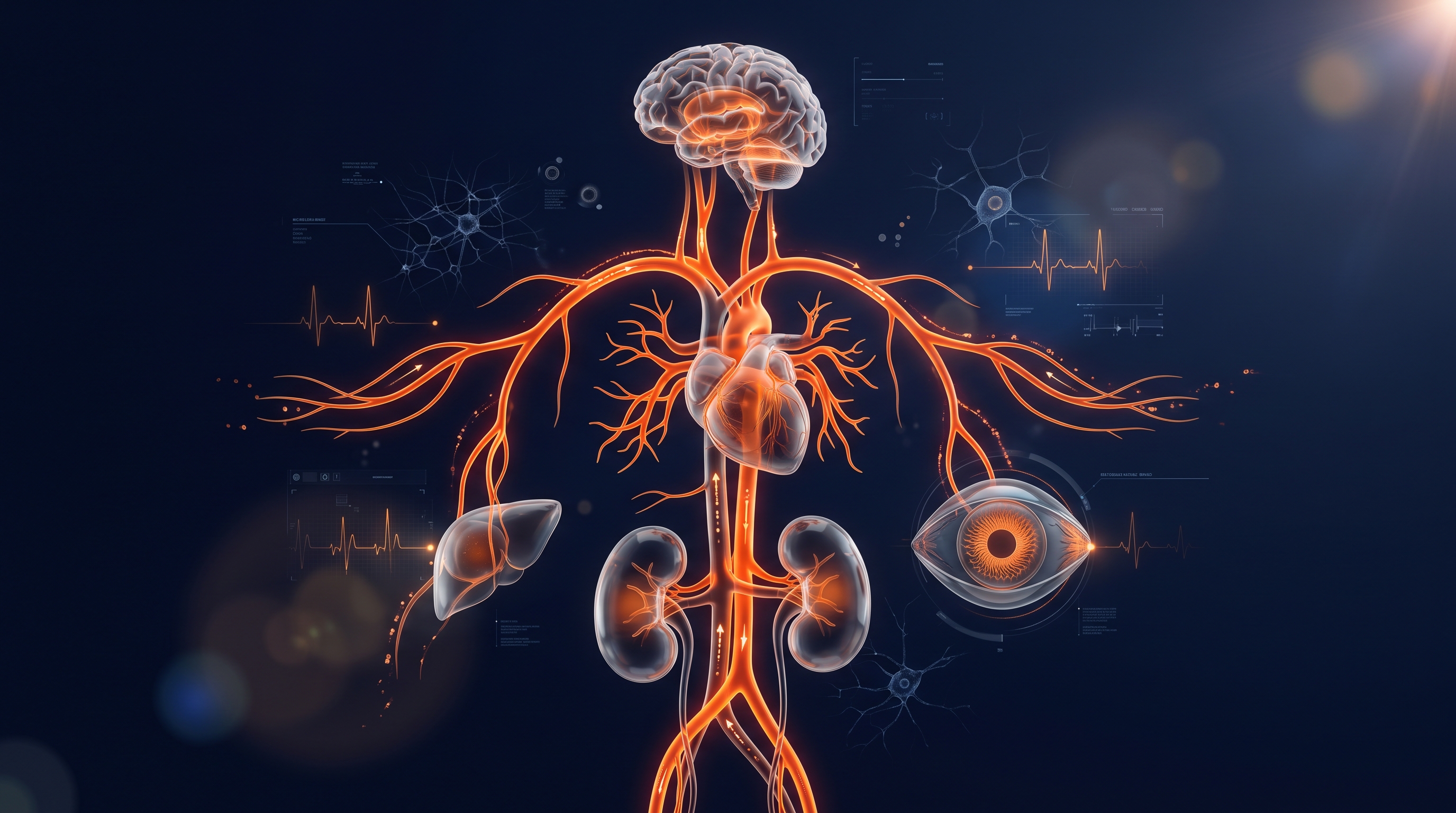
High blood pressure is often discussed in relation to the heart and stroke. Searches for high blood pressure kidney damage show another important awareness thread: hypertension can affect more than one organ system. NHS public information notes extra strain on blood vessels, heart, brain, kidneys and eyes, and lists kidney disease among conditions whose risk can rise if high blood pressure is not treated.
This post maps those wider effects in careful language. It is education, not a scan of your organs.
Why multiple organs can be involved
Organs depend on a network of blood vessels. When pressure stays high, that network can be stressed. Different tissues show different long-term vulnerabilities. That is why clinicians talk about hypertension as a systemic issue, not only a “heart number.”
Kidneys
The kidneys filter waste and help regulate fluid and blood pressure itself — a two-way relationship. Raised pressure can contribute to kidney damage over time, and kidney problems can in turn make blood pressure harder to control. NHS public information includes kidney disease among risks linked with untreated high blood pressure.
What this means practically: if you have known kidney disease, or a raised blood pressure reading, your GP may want a joined-up view of both. Occupational screening is not a full renal work-up.
Eyes
Delicate vessels at the back of the eye can be affected by long-term high pressure. Eye changes are a clinical matter for optometrists and doctors — not something this blog can diagnose from symptoms alone. Regular sight checks and telling your eye clinician about known hypertension are sensible general habits; personal findings belong in clinical records.
Brain
Beyond stroke risk (see the companion post), NHS public information also lists vascular dementia among conditions whose risk can increase with untreated high blood pressure. Brain health is another reason earlier awareness matters.
Heart and circulation
Heart disease, heart attacks, and heart failure sit in the same public NHS risk list. Organ awareness is cumulative: protecting vessels helps more than one system.
What you might notice — and what you might not
Many organ effects of hypertension develop quietly. You might not feel “kidney pain” or “eye pressure” from high blood pressure in daily life. Waiting for organ-specific symptoms is a poor detection strategy. Blood pressure measurement and clinical follow-up remain the practical tools.
If you develop sudden visual loss, severe headache with neurological symptoms, chest pain, or other emergency features, seek urgent NHS care — do not wait for an occupational appointment.
Occupational health’s limited but useful role
Absolute Biomedical checks blood pressure as part of rail medicals and some wellbeing services. That can prompt earlier GP conversations. It does not mean Absolute Biomedical is diagnosing hypertensive kidney disease or hypertensive eye disease in place of specialists.
If an examiner advises GP follow-up after a raised reading, take that advice seriously even if you feel well. Feeling well and having organ strain are not mutually exclusive concepts in hypertension awareness.
Supporting organ health in general terms
The same lifestyle themes that support blood pressure support vessels that feed kidneys, eyes, brain, and heart:
- Balanced diet, lower excess salt
- Activity and healthy weight where relevant
- Alcohol moderation and not smoking
- Medicines only as prescribed and reviewed by your clinician
No blog can promise that lifestyle changes will reverse organ damage. Early partnership with your GP is the responsible path.
Why SEO readers land on “kidney damage”
Search language is often blunt because people are worried. Clinical reality is usually slower and more nuanced than the query suggests. Not every person with raised blood pressure has detectable kidney damage today. The awareness point is simply that kidneys (and eyes, and brain vessels) are part of the same long-term story — which is why ignoring persistently high readings is unwise even when you feel well.
Coordinating clinicians
If your GP, optometrist, and occupational examiner each hold a fragment of the picture, tell them about the other fragments. Medication lists, recent readings, and known diagnoses travel better when you carry them deliberately between appointments.
Soft next step
If you are an employer exploring health surveillance or wellbeing checks that include blood pressure, or a candidate preparing for a rail medical, Absolute Biomedical can explain what happens in the appointment — while specialist organ investigation stays with NHS clinicians when needed.
Absolute Biomedical Ltd (Abercynon, South Wales) provides occupational rail medicals (including blood pressure as part of the Level 1 medical exam), drug and alcohol screening, health surveillance, and corporate health and wellbeing support. For workplace health enquiries or to book an occupational medical, call 01443 303009 (Mon–Fri 08:30–17:00) or email [email protected] as listed on absolutebiomedical.uk.