Blood Pressure at Your Occupational / Rail Medical — What to Expect
Disclaimer: This article is general information for awareness and education only. It is not personal medical advice, a diagnosis, or a treatment plan. If you have concerns about your blood pressure or health, speak to your GP or another qualified clinician. Seek urgent care (call 999) for severe symptoms such as sudden chest pain that does not go away, sudden severe headache with other worrying symptoms, or signs that could point to a heart attack or stroke — follow NHS emergency guidance.
Public information in this article is framed using plain-language guidance available from the NHS on high blood pressure (hypertension). Absolute Biomedical is not the NHS and does not claim NHS research as its own.
If you are searching for a blood pressure check occupational medical explainer, you probably have an appointment booked — or a sponsor has asked you to book one. Blood pressure is a standard part of many fitness-for-work assessments. At Absolute Biomedical, it is listed among the elements of a Level 1 rail medical screening.
This guide sets calm expectations: what happens, how to prepare, and what a raised reading may mean in broad terms — without inventing pass/fail thresholds or guaranteeing outcomes.
Where BP sits in the Absolute Biomedical Level 1 medical
Absolute Biomedical’s published Level 1 medical screening elements include:
- Medical questionnaire
- Blood pressure
- Weight / height / BMI
- General mobility
- Audiometry
- Vision and colour vision
- General health
Blood pressure is one piece of a wider fitness picture, not a stand-alone “pass the cuff” exam.
What the measurement feels like
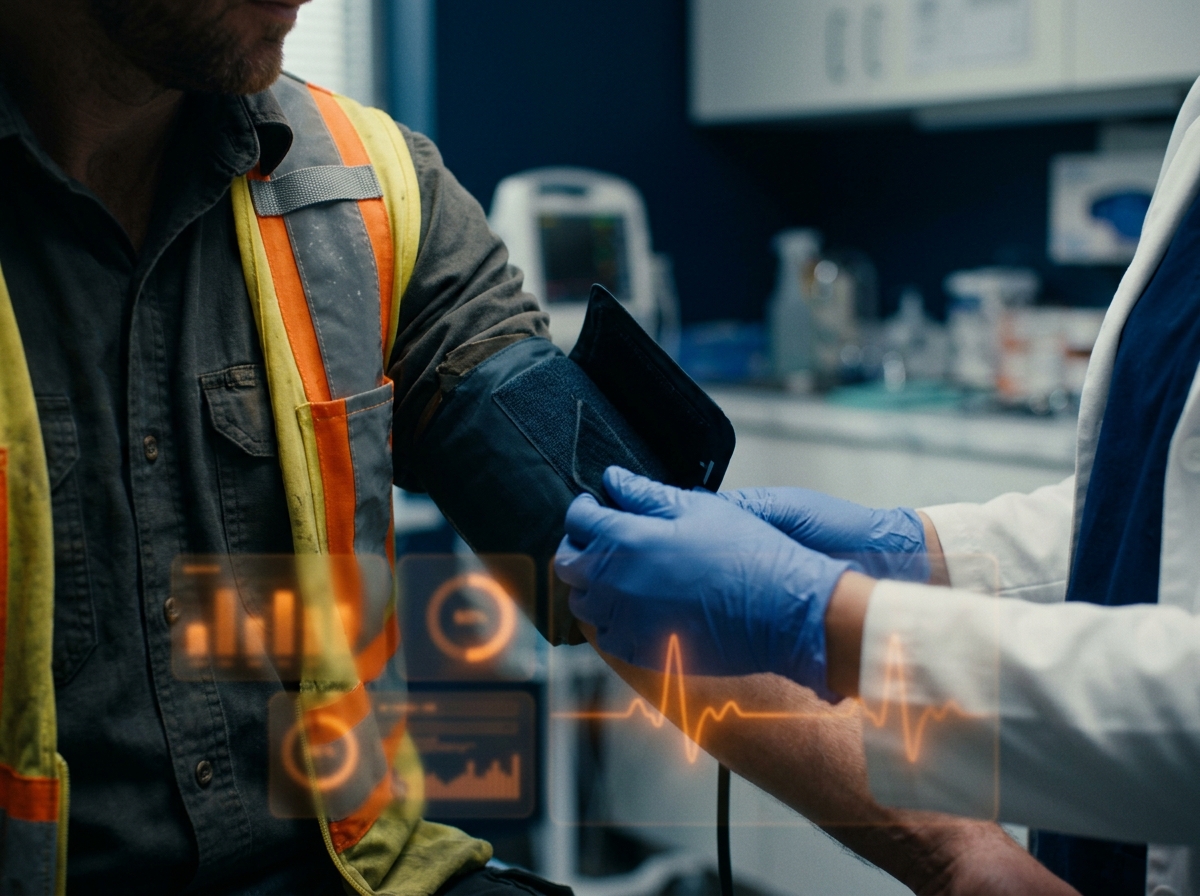
You will usually sit with a cuff on your upper arm. The cuff inflates briefly while the reading is taken. It can feel tight for a few seconds. Tell the examiner if you have a preference related to injury, lymph node surgery, or other clinical reasons a particular arm should be avoided — they will manage that appropriately.
How to arrive prepared (practical, not clinical protocol)
Helpful habits before many blood pressure checks:
- Avoid rushing in from a sprint across the car park — arrive with a few minutes to settle
- Mention recent caffeine, nicotine, or strenuous exercise if asked
- Wear a sleeve that rolls up easily
- Bring glasses/contacts and medication details as you would for the rest of the medical
- Bring valid original photo ID and National Insurance evidence as required for rail medicals
Absolute Biomedical’s site also covers ID and medication declaration expectations for medicals and D&A — follow your joining instructions.
What if the reading is raised?
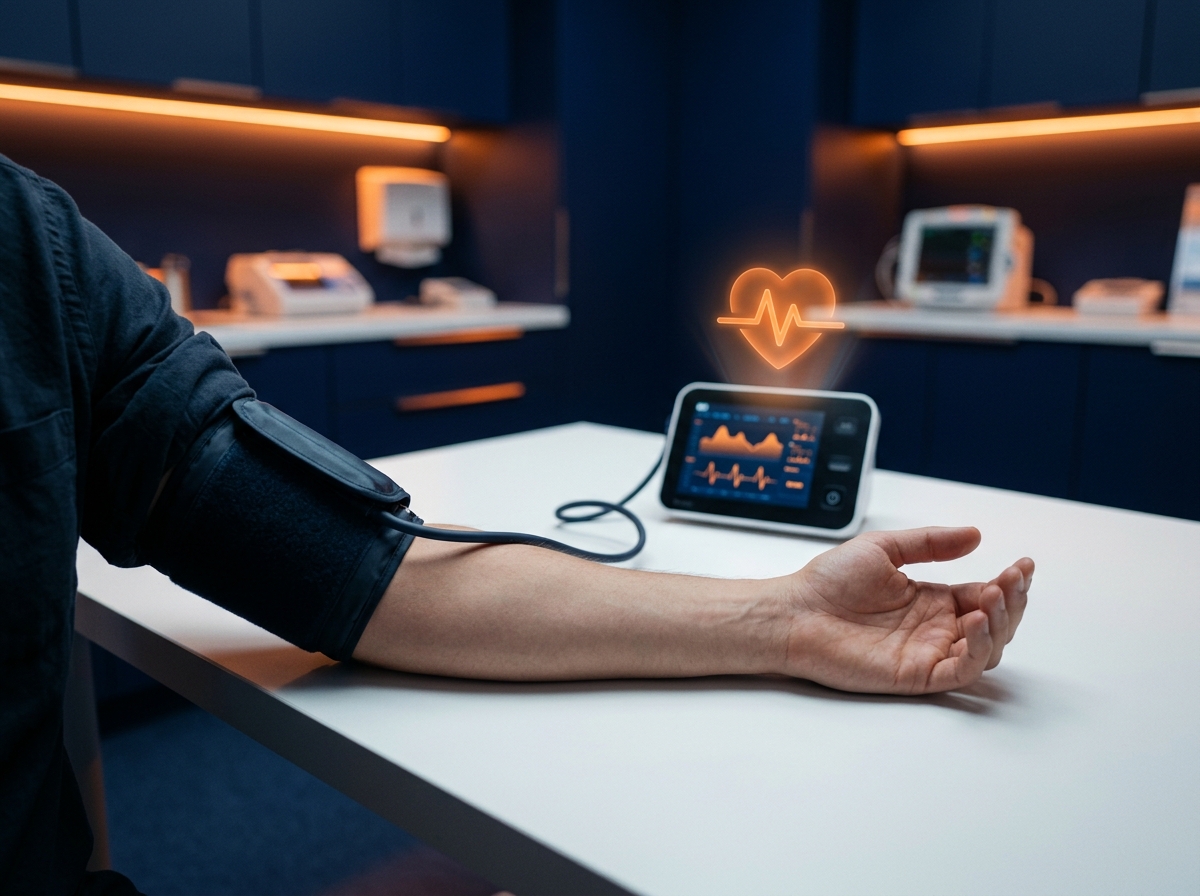
A raised reading can have several explanations: ongoing hypertension, temporary stress, pain, incomplete rest, caffeine, or other factors. Occupational pathways may include repeat measurement, discussion, advice to see your GP, or referral routes where the examiner judges that necessary.
Absolute Biomedical’s public information notes that if a candidate does not meet a satisfactory level, the examiner may refer them to their GP with guidance, or to an Occupational Health Physician for specialist consultation (additional charges may apply). Exact thresholds and decisions are clinical/occupational judgements — this article does not publish invented cut-offs.
Important nuance for candidates
One high reading does not automatically equal “career over.” Follow the examiner’s advice and complete GP follow-up promptly. Companion posts in this series cover one reading versus ongoing hypertension in more depth.
How this differs from a GP hypertension diagnosis
An occupational medical answers fitness-for-work questions against industry expectations. A GP pathway may confirm hypertension with repeated readings, home monitoring, or ambulatory monitoring, then discuss lifestyle and medicines. Both can be valuable; they are not identical processes.
General NHS public thresholds (for example 140/90 in a professional check, or 135/85 at home) are educational context only — not Absolute Biomedical’s occupational standard quoted as policy in this draft.
Timing and results
Absolute Biomedical states that medical results are typically uploaded within 24 hours unless a referral is needed. If you are also completing drug and alcohol screening, remember that lab timelines differ from medical upload timelines. Plan training starts with your sponsor accordingly.
Appointments are commonly described as around 40–60 minutes for the medical element (site FAQ also refers to around an hour). Confirm when you book if combining services.
Combined medical and D&A days
Many new rail starters attend for both a medical and a drug and alcohol screen. Blood pressure still belongs to the medical pathway; urine collection and breath alcohol belong to D&A. Mentally separating those streams reduces confusion if one pathway needs follow-up while the other proceeds on a different clock.
Aftercare mindset
Leave with clarity: was the medical cleared pending upload, referred, or awaiting further information? Write down the next action in one sentence before you leave the centre. That single habit prevents weeks of uncertain email chains.
Soft next step
To book a rail medical or ask what the blood pressure element involves on the day, contact Absolute Biomedical. Bring questions — calm preparation beats last-minute anxiety.
Absolute Biomedical Ltd (Abercynon, South Wales) provides occupational rail medicals (including blood pressure as part of the Level 1 medical exam), drug and alcohol screening, health surveillance, and corporate health and wellbeing support. For workplace health enquiries or to book an occupational medical, call 01443 303009 (Mon–Fri 08:30–17:00) or email [email protected] as listed on absolutebiomedical.uk.